
Los Angeles Birding: Angeles National Forest
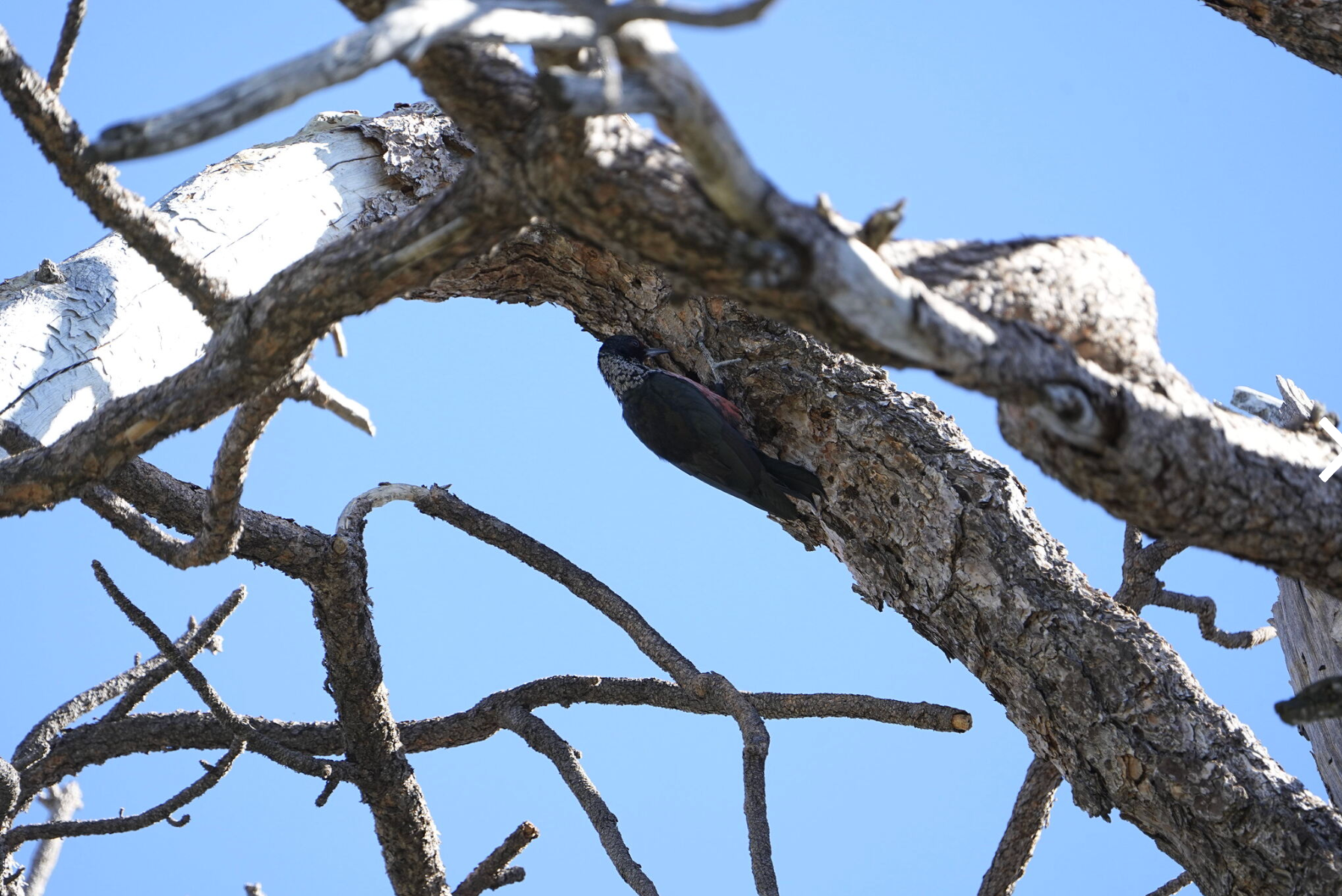
Photo of a Lewis’s woodpecker (Melanerpes lewis) by Moses Aubrey, resident iNatty Baddie. You can follow him on iNaturalist or Instagram to see his work. This was one of our target species on a recent birding trip in the Angeles National Forest.
Recently, I ventured into the Angeles National Forest with my partner, Laura (IG: @firepantshigh), along with Moses Aubrey (IG: @average__moe) and Anthony Carnevale (IG: @carnanthony_v), to enjoy a day of birding. We first went to the Chilao Visitor Center, where we eagerly searched for Grace’s warbler (Setophaga graciae), a sought-after species known for its distinctive markings unique to the warbler family and rarely seen in Los Angeles. Later, we made our way to the Mt Wilson Observatory, aiming to spot the group of Lewis’s woodpeckers (Melanerpes lewis), which I had yet to see in person - I have only worked on this species for taxidermy. When I get to see a bird in real life that I have only seen on my workbench, it truly is a celebrity sighting.
While we were focused on these target birds, the real joy always comes from any bird sightings and the appreciation for the nature that surrounds us, even if we didn’t get both of our target species on this trip. The other activity we didn’t get around to is visiting the Chilao Nature Center itself. It was closed on the morning we went, but I heard there is taxidermy, so I definitely have to make another trip out there soon to look at their collection.
The Angeles National Forest is truly a massive and incredible forest, with an abundance of birding hotspots that span across 700,000 acres in Los Angeles County. With expansive landscapes, an amazing range of elevation, the forest provides habitats for so many bird species, both resident and migratory, making it one of the best destinations for birders and nature enthusiasts alike. While this blog post highlights one trip to two different locations, there is much more to explore and document - and more blog posts to come, since I try to make it out to the forest as often as I can. I hope to convince some of you to get out to the forest and enjoy the beauty it offers.
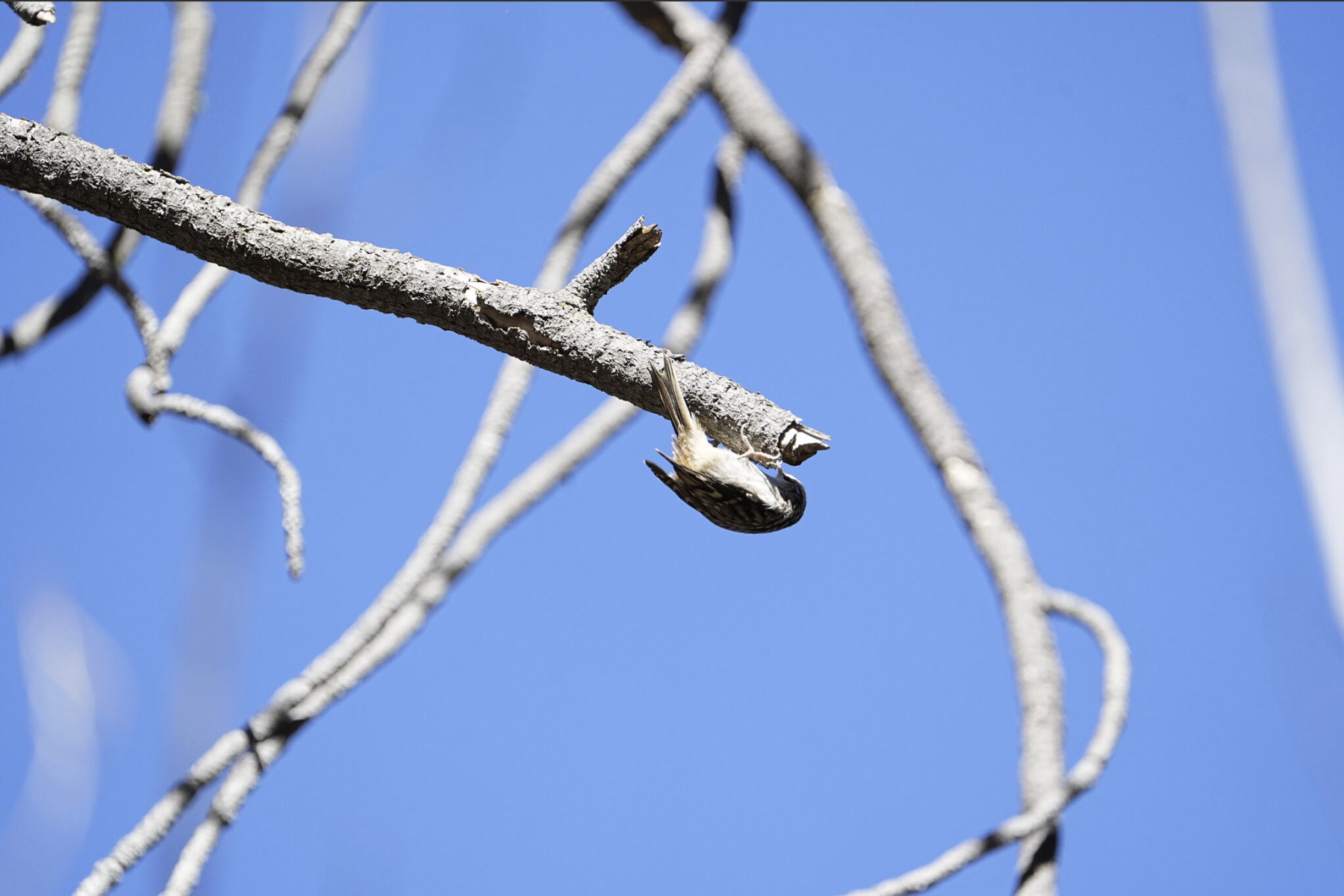
Brown creeper (Certhia americana). Photo by Moses Aubrey.
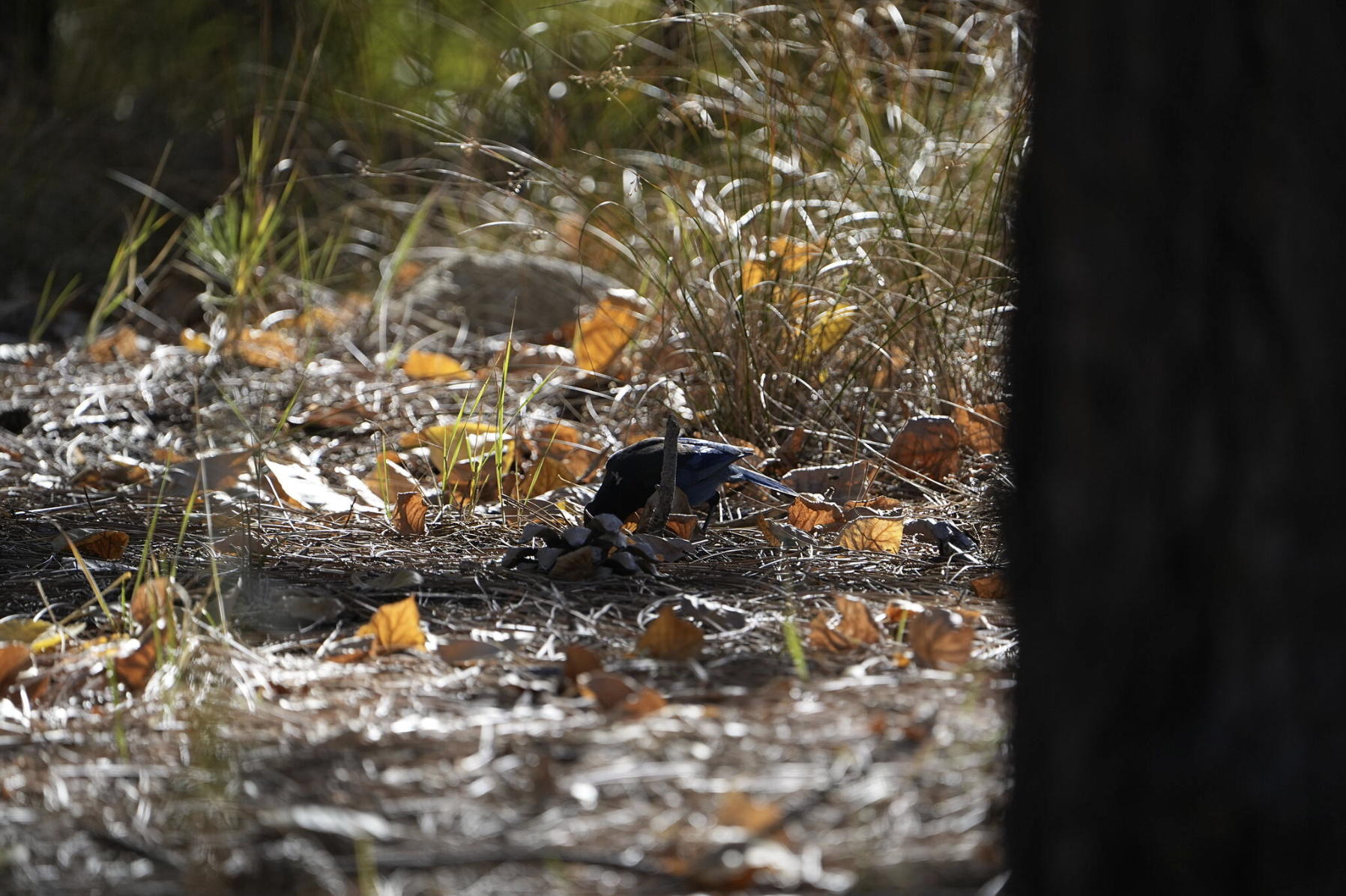
Steller’s jay (Cyanocitta stelleri). Photo by Moses Aubrey.
At Chilao, we saw some of the typical species you would expect: brown creeper (Certhia americana), white-breasted nuthatch (Sitta carolinensis), oak titmouse (Baeolophus inornatus), northern flicker (Colaptes auratus)…the usual suspects. Unfortunately, the Grace’s warbler definitely proved that it is a rare sighting, and it completely evaded us during our trip. A minor disappointment, however, being completely surrounded by the forest and all of the other species means that the disappointment could never be that deep. We were actively searching for sapsuckers, since we knew they were in the area and we could see the numerous sap wells on the surrounding trees. Despite our efforts, I didn’t manage to see one myself. Moses, however, insisted that he caught a glimpse of a sapsucker and even claimed to have photographed it during the trip. It wasn’t that I doubted him, but I couldn’t help feeling a bit jealous when he sent me a photo that night of the very sapsucker we had been trying to find all morning (see photo below for photographic evidence).
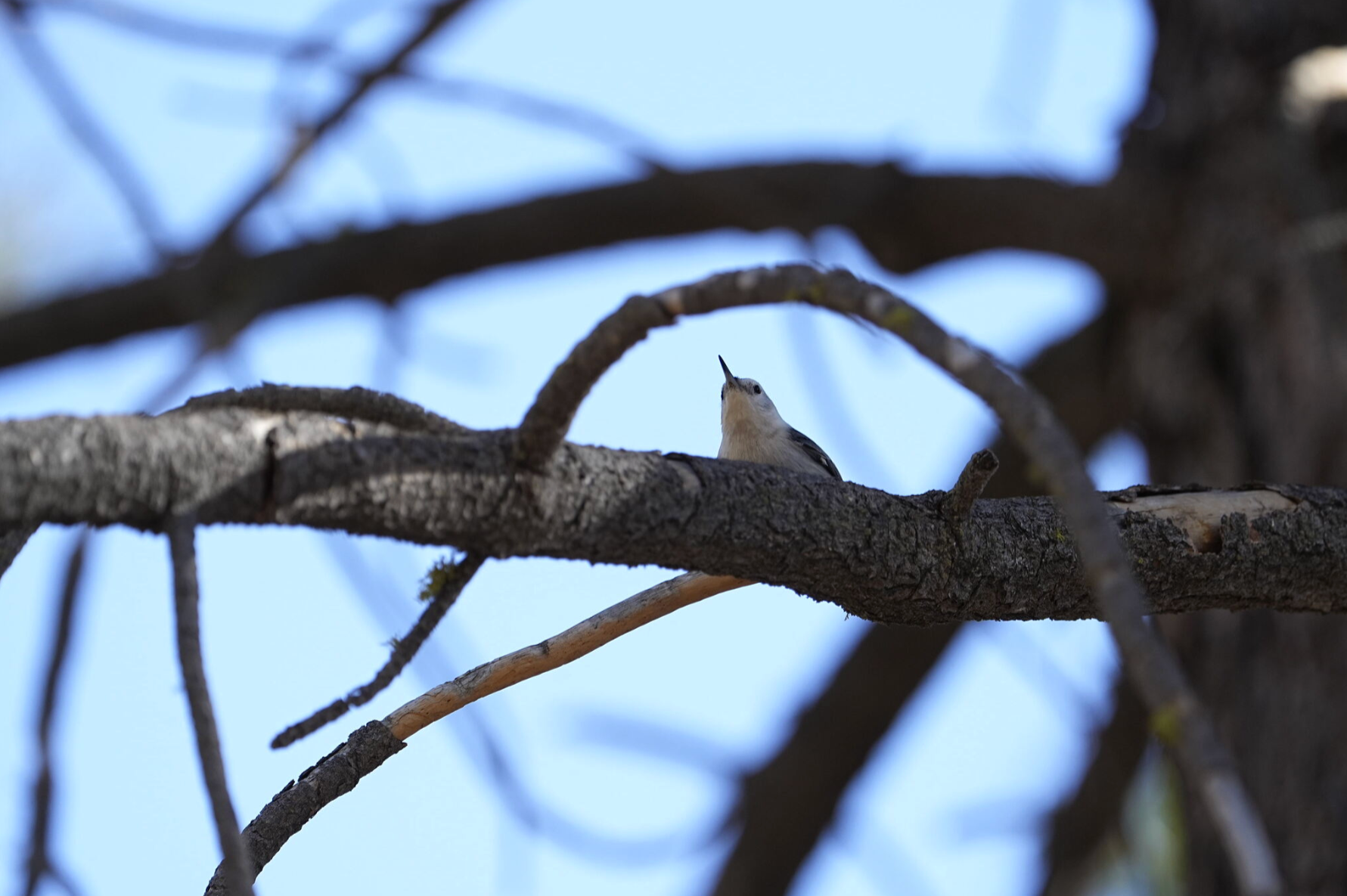
White-breasted nuthatch (Sitta carolinensis). Photo by Moses Aubrey.
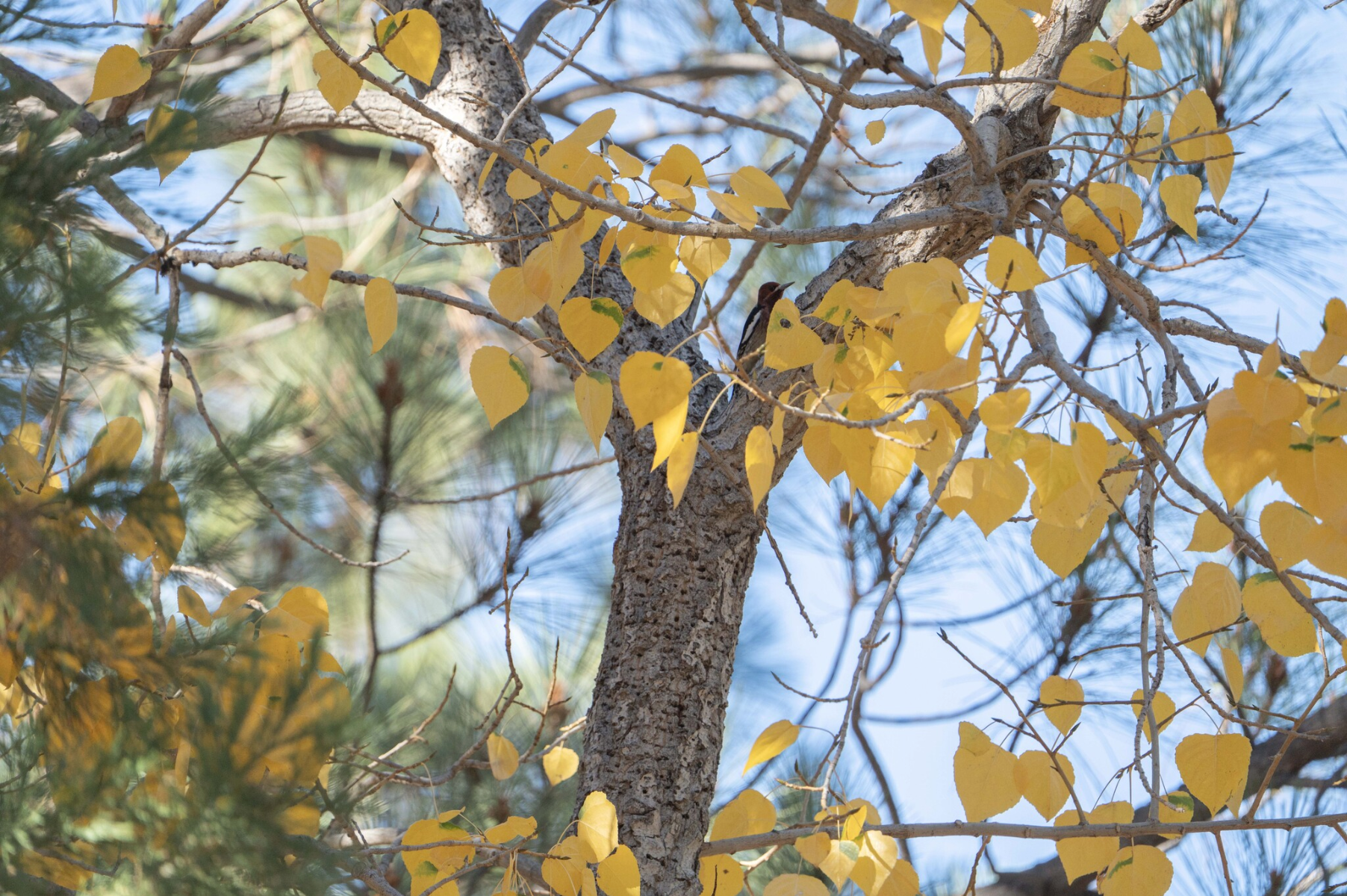
Red-breasted sapsucker (Sphyrapicus ruber). Photo by Moses Aubrey.
After birding for a while at Chilao, we headed over to the Mt Wilson Observatory. Reports on eBird, rare bird alerts, and iNaturalist had been posting recently about a small group of Lewis's woodpeckers spotted near the observatory, so we were determined to locate them. Upon our arrival, we were fortunate enough to run into another birder who kindly directed us toward a dead tree situated on the northeast end of the visitor rest area. There, we met another birder and his dog who had been coming each morning that week specifically to photograph the woodpeckers. We chatted with this birder for a while, Samuel Cannon, who has a particular love for woodpeckers - you can see all his photographs on iNaturalist, @canned_salmon. Watching these birds was truly mesmerizing—their flight patterns were surprisingly graceful, closely resembling those of swallows or swifts rather than the typical woodpecker movements. We had an incredible time observing their behavior and were able to capture some stunning, memorable photographs of these fascinating creatures. I managed to get a decent photo of the Lewis’s woodpecker, but after our trip, I asked Moses if I could use his photos for my blog, since he takes incredible photos (thank you, Moses!).
Speaking of Moses, he is on a journey to become the most followed person on iNaturalist (the number 1 iNatty Baddie) - so give him a follow on iNat if you have an account and are a fan of incredible nature photography. If you want to see more of his photography and film portfolio, you can check out his website as well.
Birding is undeniably the greatest hobby of all time (no bias here), but what truly makes the experience is being able to build connections with fellow nature enthusiasts and share those incredible moments with friends. There’s something uniquely fulfilling about spotting a rare bird together, or commiserating in your endless search for birds that seem to just barely miss you - sometimes, it feels like the birds just know you and your friends are showing up with your cameras and hide. While adding to your life list is exciting, the joy of birding really stems from being surrounded by people who cherish the natural world just as much as you do. Ultimately, it’s these relationships and memories that make birding not just a pursuit of adding species to your life list, but a celebration of community and the beauty of the outdoors.
—
Check eBird or iNaturalist to see what is in the area at any given time of the year! If you are new to birding and want to learn how to bird by ear, I also recommend the app Merlin Bird ID.
Location: Chilao Visitor Center at 1 Moccasin Trail, Palmdale, CA 93550 & the Mount Wilson Observatory at 100 Mt Wilson Circle Road, Mt Wilson, CA 91023
Hours: Chilao is open for visiting during daylight hours (7 am - 7 pm); Mt Wilson Observatory is open most days from 10 am - 5 pm
Additional information:
Parking: There are parking lots located at both locations.
Accessibility: Although the area around the parking lot is paved at the visitor center, there are slopes and trails surrounding the area. The visitor center has limited hours. To get to the Lewis’s woodpeckers at Mt. Wilson, some slopes are generally accessible, but watch your step for loose dirt.
Signage: There are plenty of signs posted around the trails that talk about what animals you may see in the park, both of the facility’s goals, etc.
Nature center: The visitor center at Chilao has limited hours. Check their website for business hours. The Mt Wilson Observatory is open most days from 10 am - 5 pm.
Bathrooms: There are camp restrooms surrounding the Chilao Visitor Center that are open; however, the restrooms at the visitor center are closed when the center is closed. There are restrooms located at Mt Wilson Observatory during business hours.
Friendly reminder to leave no trace and respect wildlife when birding.
